Cheapest Sales Funnel Software That Still Gets Results

Looking for the cheapest sales funnel software that still gets results? This guide compares top options by price and performance so you can build a high-converting funnel without draining your budget.
Table of Contents
- What “Affordable” Actually Means for Funnel Builders
- The 5 Cheapest Sales Funnel Software Options That Still Deliver
- Side-by-Side Comparison
- How to Choose the Right Tool for Your Budget
- Common Mistakes That Make “Cheap” Funnels Expensive
- Who Should Pick Which Tool
- Frequently Asked Questions
The cheapest sales funnel software that still gets results isn’t always the one with the lowest sticker price — it’s the one that converts leads without requiring a $300/month platform to do it. This guide breaks down five tools that balance affordability and real-world performance, so you can launch, test, and grow without locking yourself into a bloated plan you’ll regret.
Photo: Artem Podrez (Pexels)
What “Affordable” Actually Means for Funnel Builders
Most bloggers and side-hustlers start funnel shopping and get sticker shock fast. ClickFunnels 2.0 starts at $97/month. Kajabi runs $149/month. Those are solid platforms — but they’re not entry-level budgets.
“Affordable” in this context means:
- Under $50/month for a solo creator or early-stage business
- Functional funnels — opt-in pages, sales pages, order bumps, email sequences
- No major feature gaps that force you to duct-tape three extra tools together
The tools below all meet that bar. Some go further, offering free tiers that actually work.
The 5 Cheapest Sales Funnel Software Options That Still Deliver
1. Systeme.io — Best Free Tier in the Category
Systeme.io offers a permanently free plan that includes up to 2,000 contacts, 3 sales funnels, unlimited emails, and 1 course. That’s a complete stack for a new creator with zero monthly spend.
The paid plans start at $27/month (Startup) and unlock unlimited funnels, up to 5,000 contacts, and automation rules. For most solo operators, the Startup plan covers everything until they’re generating consistent revenue.
Where it shines: All-in-one simplicity. You get funnel pages, email marketing, course hosting, and affiliate management in one dashboard. No Zapier glue required.
Where it falls short: The page editor is functional but not as flexible as Elementor or Thrive Architect. Design customization has limits, and the template library is smaller than ClickFunnels’.
Best for: Bloggers and course creators who want one affordable tool instead of three separate subscriptions.
2. GetResponse — Funnel Builder Bundled Into Email Marketing
GetResponse is primarily an email marketing platform, but its Conversion Funnel feature (included from the Marketing Automation plan at $59/month) handles landing pages, opt-in flows, sales pages, webinar funnels, and even Facebook Ads integration.
The Free plan covers 500 contacts and basic newsletters — no funnels. The Email Marketing plan at $19/month includes landing pages and one-click integrations. The full funnel builder kicks in at $59/month.
Where it shines: If you were already planning to pay for email marketing, GetResponse bundles funnel-building into the same tool. You avoid paying separately for a page builder and an autoresponder.
Where it falls short: The funnel builder works best for lead-gen and webinar flows. Complex multi-product sales funnels with upsells and downsells are more limited compared to dedicated funnel platforms.
Best for: Email-first marketers who want funnel pages without switching to a new platform.
3. GoHighLevel — Cheapest Per Feature (At $97/Month)
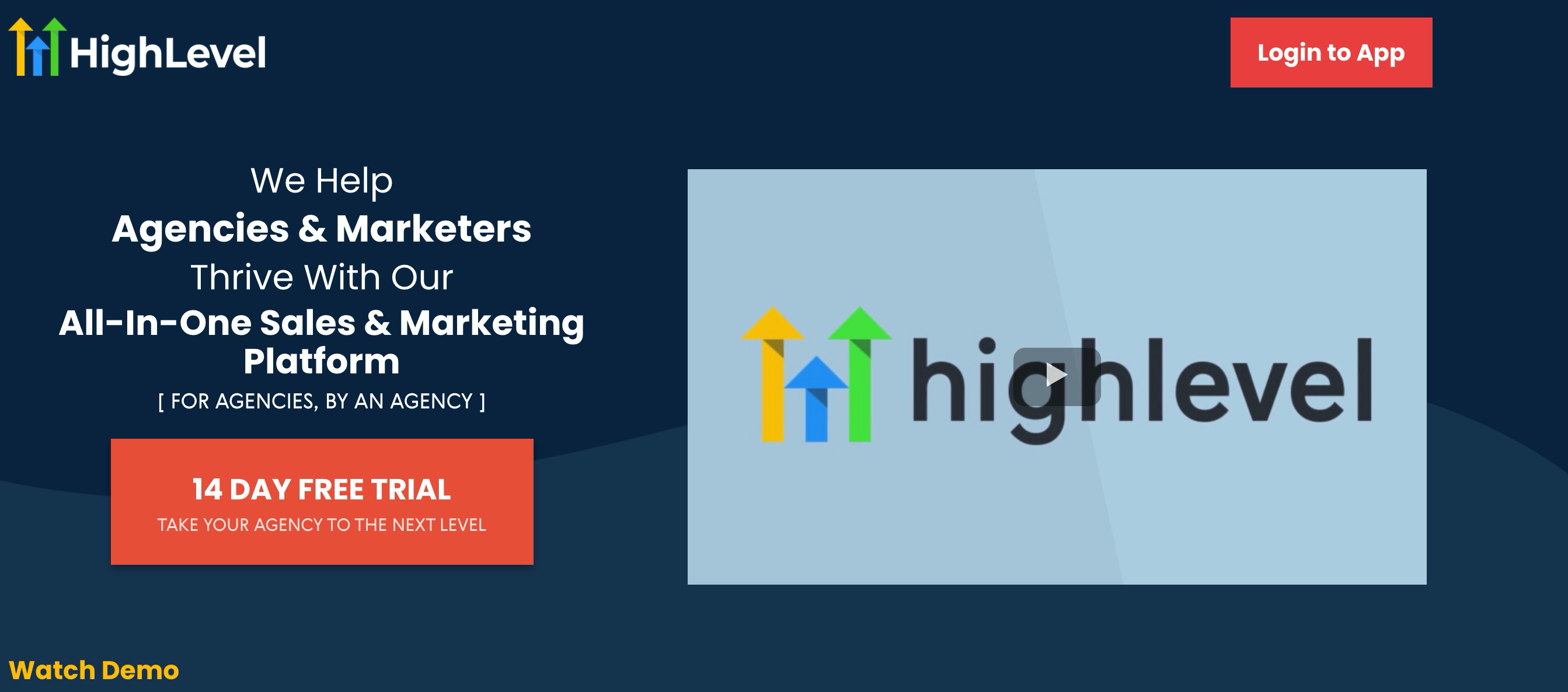
GoHighLevel looks expensive at $97/month for the Starter plan, but consider what’s included: CRM, funnel builder, website builder, email marketing, SMS automation, reputation management, appointment scheduling, and more.
At the same $97 price point, ClickFunnels 2.0 gives you funnels and not much else. GoHighLevel gives you an agency-grade stack.
Where it shines: If you’re building funnels for clients or running a small agency, GoHighLevel’s white-label options and sub-account structure make it far more cost-efficient than any other tool at this price. One $97/month plan can power multiple client accounts.
Where it falls short: Steep learning curve. The dashboard is dense. This is not a tool you spin up in an afternoon.
Best for: Freelancers managing client funnels, small agencies, or advanced marketers who want one platform to replace five.
4. ClickFunnels 2.0 — The Benchmark (Worth It at the Right Stage)
ClickFunnels 2.0 starts at $97/month and remains the most widely recognized funnel platform on the market. The community, template library, and native analytics are genuinely strong — and the Share Funnel feature lets you import a fully built funnel in seconds.
At the $97/month tier, you get 20 funnels, unlimited pages, 1 domain, 3 courses, and a blog. The $297/month plan removes most limits.
Where it shines: Ecosystem depth. Training resources, a massive community (the ClickFunnels Facebook group has over 250,000 members [verify]), proven templates, and deep documentation make it faster to get results even if you’re new to funnels.
Where it falls short: It’s the most expensive option at this tier. For a creator making under $2,000/month, the ROI math is harder to justify versus Systeme.io at $27/month.
Best for: Established online businesses ready to invest in a proven platform with a strong support ecosystem.
5. Kartra — Mid-Range All-in-One With Strong Automation
Kartra starts at $119/month (Starter plan, up to 2,500 contacts) and includes landing pages, email marketing, video hosting, membership sites, affiliate management, and behavioral lead tagging.
The automation logic in Kartra — called “Kartra Sequences” — is one of the more visual and intuitive builders in this price range. You can set up multi-step conditional automations without touching code.
Where it shines: Built-in behavioral triggers. When a subscriber watches 75% of your video and doesn’t click a CTA, Kartra can automatically follow up. That kind of logic at the native level is genuinely useful for course creators and coaches.
Where it falls short: The Starter plan limits you to 2,500 contacts and 1 custom domain, which you can hit faster than expected. Upgrading to the Growth plan jumps to $229/month.
Best for: Course creators and coaches who sell high-ticket offers and need smart automation without a developer.
Side-by-Side Comparison
| Tool | Starting Price | Free Plan | Funnel Pages | Email Included | Best For |
|---|---|---|---|---|---|
| Systeme.io | $0 (free forever) / $27/mo paid | Yes — 2,000 contacts, 3 funnels | Yes | Yes | Beginners, course creators, budget-first |
| GetResponse | $19/mo (pages) / $59/mo (funnels) | Yes — 500 contacts, no funnels | Yes (from $59/mo) | Yes | Email-first marketers adding funnel capability |
| GoHighLevel | $97/mo | 14-day trial | Yes | Yes | Agencies, freelancers managing multiple clients |
| ClickFunnels 2.0 | $97/mo | 14-day trial | Yes | Yes (basic) | Established businesses, affiliate marketers |
| Kartra | $119/mo | 30-day trial ($1) | Yes | Yes | Course creators, coaches, complex automations |
How to Choose the Right Tool for Your Budget
The cheapest sales funnel software that still gets results depends on three variables: your current revenue, your technical comfort, and whether email is already a separate line item in your budget.
Run through this decision tree:
-
Under $50/month total budget? → Start with Systeme.io’s free or $27/mo plan. It covers funnels, email, and a basic course — enough to test your offer.
-
Already paying for email marketing? → Check if that platform has a landing page or funnel tool built in. GetResponse bundles both from $59/month, which could replace two separate tools.
-
Managing funnels for clients or running an agency? → GoHighLevel at $97/month is the most cost-efficient per-feature platform in this roundup. The learning curve is real, but one plan can power multiple client accounts.
-
Selling a premium course or coaching program ($500+)? → Kartra’s behavioral automation earns its higher price if your audience is warm and you want personalized follow-up sequences.
-
Want a proven ecosystem with templates and community? → ClickFunnels 2.0 at $97/month is the benchmark for a reason. The template library and training resources shorten your launch timeline.
Common Mistakes That Make “Cheap” Funnels Expensive
Even the cheapest sales funnel software that still gets results can drain your budget if you make these errors.
Over-building before testing. A 12-step funnel on a $27/month platform still fails if the offer isn’t validated. Build a 3-page funnel first — opt-in, sales page, thank you — then iterate.
Ignoring email deliverability. A funnel is only as strong as its follow-up sequence. Systeme.io includes email, but check whether your plan includes automation sequences before assuming it’s covered.
Choosing based on features you won’t use. Kartra’s video hosting is compelling, but if you host your courses on Teachable or Thinkific anyway, you’re paying for a feature that sits idle.
Not accounting for renewal pricing. Bluehost’s Basic hosting plan, for example, starts at $2.95/mo but renews at $11.99/mo. Funnel platforms don’t typically have that gap, but always read the annual vs. monthly pricing before committing.
Who Should Pick Which Tool
- New blogger or creator, tight budget: Systeme.io free plan → upgrade to $27/mo when you need more funnels.
- Email marketer expanding to paid products: GetResponse at $59/mo consolidates your stack.
- Agency owner or freelancer: GoHighLevel at $97/mo is the most scalable option at that price.
- Course creator with high-ticket offers: Kartra at $119/mo justifies the cost with behavioral automation.
- Affiliate marketer or established product seller: ClickFunnels 2.0 at $97/mo for proven templates and community.
Frequently Asked Questions
Is there a free sales funnel builder that actually works?
Systeme.io’s free plan is the most functional free option available. It includes 3 funnels, unlimited email sends to up to 2,000 contacts, and 1 hosted course — enough to run a real lead-gen or digital product funnel without paying a cent until you scale.
What’s the difference between a funnel builder and a landing page builder?
A landing page builder creates individual pages. A funnel builder connects pages into a sequence — opt-in → tripwire → core offer → upsell — and typically includes email automation, order processing, and analytics to track drop-off at each step.
Can I use WordPress as a cheap funnel builder instead?
Yes, with caveats. WordPress with Thrive Architect or Elementor Pro can build funnel-style pages, but you’ll need separate tools for email automation (like Kit or ActiveCampaign), a payment processor, and possibly a membership plugin. The monthly cost can stay low, but the setup complexity is higher than an all-in-one platform.
How long does it take to build a basic funnel?
A 3-page funnel (opt-in, sales page, thank you page) takes 3–6 hours on Systeme.io or ClickFunnels using a template. Writing the copy typically takes longer than the technical build. Budget a full weekend for your first funnel end-to-end.
Is GoHighLevel worth the $97/month for a solo marketer?
Only if you’re managing clients or plan to. For a solo creator selling one product, Systeme.io at $27/month covers the same core funnel functionality at a fraction of the cost. GoHighLevel’s value multiplies with scale and client volume.
The cheapest sales funnel software that still gets results is the one matched to your stage of business — not the one with the longest feature list. Start lean, validate your offer, then upgrade when the revenue supports it.
For more guides on building and optimizing your online business stack, bookmark Two Funnels Away and check back as we expand this resource.
0 Comments on "Cheapest Sales Funnel Software That Still Gets Results"
Related posts



Leave a Comment
You must be logged in to post a comment.