GoHighLevel vs Kajabi: pricing, features, and best fit

GoHighLevel and Kajabi both promise to run your entire online business from one place — but they’re built for very different users. This comparison breaks down pricing, features, and which platform fits your situation.
Table of Contents
- What each platform is actually designed to do
- GoHighLevel pricing breakdown
- Kajabi pricing breakdown
- Feature comparison: where each platform leads
- Head-to-head comparison table
- Ease of use and learning curve
- Integrations and extensibility
- GoHighLevel vs Kajabi: pricing, features, and best fit — who should choose which
- What about combining both?
- Frequently asked questions
GoHighLevel vs Kajabi: pricing, features, and best fit is one of the more nuanced comparisons in the all-in-one platform space. GoHighLevel targets agencies and service businesses that need deep CRM and automation tools. Kajabi is purpose-built for creators selling courses, memberships, and digital products. Choose the wrong one and you’ll either pay for features you’ll never use or hit a ceiling faster than you expect.
Photo: Atlantic Ambience (Pexels)
This guide breaks down both platforms across pricing, core features, and use cases — so you can make a clear-eyed decision.
What each platform is actually designed to do
Before comparing line items, it helps to understand each tool’s design philosophy.
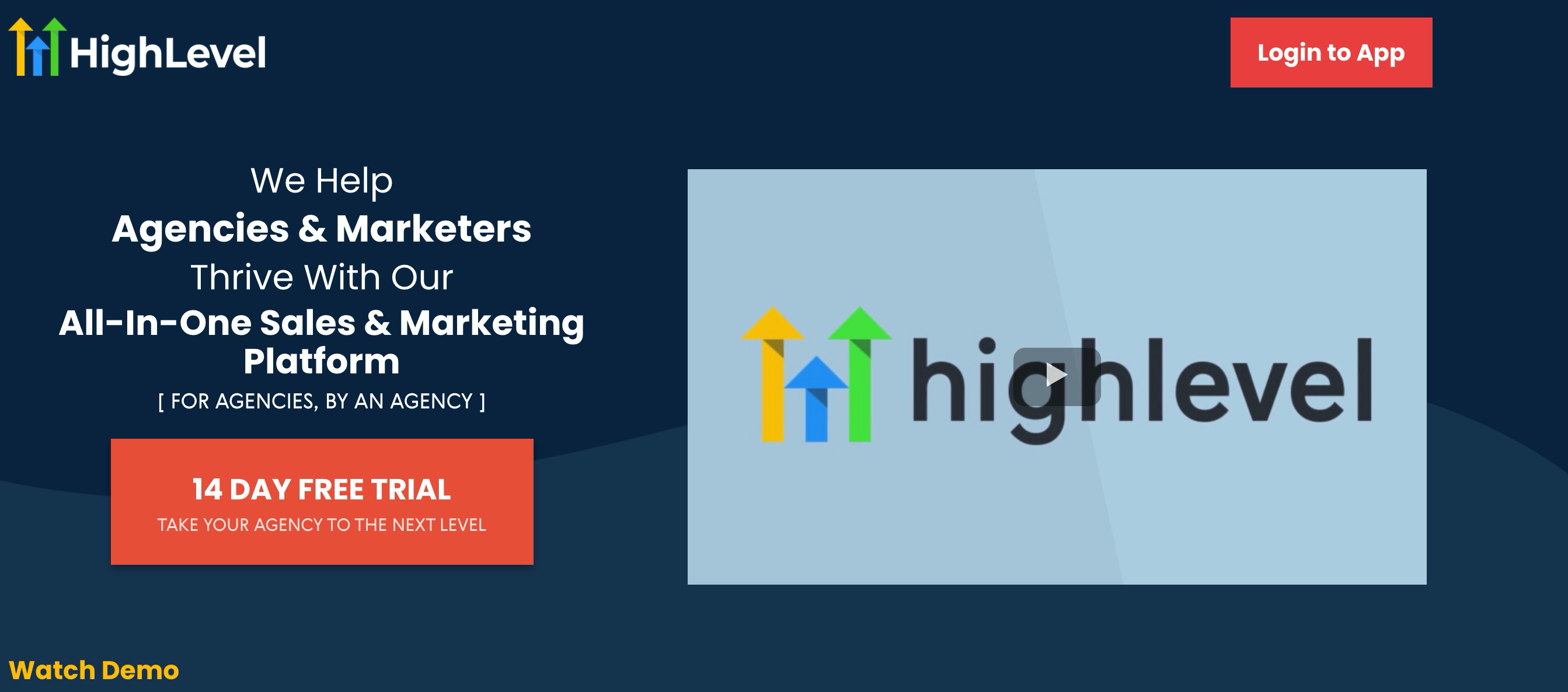
GoHighLevel (often called GHL) was built for marketing agencies. Its core value proposition is a white-labeled CRM and automation platform that agencies can resell to clients. It includes funnels, websites, email, SMS, calendar booking, reputation management, and a pipeline CRM — all under one roof.
Kajabi was built for knowledge entrepreneurs. It centers on course delivery, membership sites, coaching programs, and digital product sales. Its marketing tools exist to support those products — not to serve as a standalone CRM for client management.
Neither platform is trying to be the other. That distinction matters when you’re evaluating GoHighLevel vs Kajabi: pricing, features, and best fit.
GoHighLevel pricing breakdown
GoHighLevel offers three main plans:
- Starter — $97/month: One location (account), unlimited contacts, funnels, websites, email, SMS (usage-based), calendar, and basic CRM. No white-labeling.
- Unlimited — $297/month: Unlimited sub-accounts (client accounts), white-label desktop app, API access, and branded client portals.
- SaaS Pro — $497/month: Everything in Unlimited, plus the ability to resell GHL as your own software and set your own pricing tiers.
GoHighLevel does not offer a free plan. It offers a 14-day free trial on all plans. SMS and email sending costs are usage-based and billed separately through Twilio and Mailgun integrations — budget an extra $20–$100/month depending on volume.
One important note: GoHighLevel’s pricing makes more sense the moment you manage multiple clients. At $297/month for unlimited sub-accounts, the math works out quickly if you’re billing clients $100–$300/month each for access.
Kajabi pricing breakdown
Kajabi’s plans are tiered by the number of products, funnels, and active members you can have:
- Basic — $149/month (or $119/month billed annually): 3 products, 3 funnels, unlimited landing pages, 1,000 active members, 1 website, 1 admin user.
- Growth — $199/month (or $159/month annually): 15 products, 15 funnels, 10,000 active members, 10 admin users, affiliate program access, and advanced automations.
- Pro — $399/month (or $319/month annually): 100 products, 100 funnels, 20,000 active members, 25 admin users, 3 websites, and custom code.
Kajabi offers a 30-day free trial on all paid plans — longer than GHL’s 14-day window. Transaction fees: none. Kajabi processes payments through Stripe or PayPal and takes no cut of revenue, which is a meaningful advantage over some competing course platforms.
Feature comparison: where each platform leads
CRM and sales pipeline
GoHighLevel wins this category outright. It includes a full visual pipeline CRM with deal stages, contact scoring, task assignments, and automated follow-up sequences triggered by pipeline movement. Sales teams and agencies actively managing leads will find this essential.
Kajabi has no true CRM. It tracks contacts and purchases, but there’s no pipeline view or deal-stage workflow. If your “sales process” is a funnel that leads to a checkout page, Kajabi handles that fine. If you’re running discovery calls, proposals, and multi-touch follow-ups, it won’t.
Course and membership delivery
Kajabi leads here. Its course builder supports video hosting (via Wistia), drip content scheduling, quizzes, assessments, and completion certificates. The student dashboard is polished and purpose-built. Community features (Kajabi Communities) are built in at Growth and Pro tiers.
GoHighLevel added a course/membership module, and it works. But the experience is noticeably less refined than Kajabi’s. Video hosting requires a third-party integration or external hosting. The student portal is functional but basic.
If selling and delivering digital courses is your primary revenue stream, Kajabi’s depth matters.
Funnel and website builder
Both platforms include funnel builders and website builders. GoHighLevel’s drag-and-drop builder is flexible and covers most common funnel types — opt-in, sales, webinar, appointment booking. Kajabi’s funnel builder (called “Pipelines”) is more opinionated: it offers templated blueprints for specific product types (course launch, lead magnet, etc.) that simplify the process for non-technical users.
For pure funnel building, GoHighLevel is more customizable. For speed and guided setup, Kajabi’s Pipelines are easier.
Email marketing and automation
GoHighLevel supports email, SMS, voicemail drops, Facebook Messenger, Instagram DMs, and Google Business Chat — all in one unified inbox. Its automation builder (Workflows) is one of the most powerful in this price range. Multi-channel sequences, conditional logic, and webhook triggers are all available on the Starter plan.
Kajabi’s email marketing is solid for nurturing course leads and students. It supports broadcasts, sequences, and event-triggered automations. What it lacks is multi-channel reach. Email is the only outbound channel — no SMS, no social DMs.
Reporting and analytics
GoHighLevel tracks funnel conversions, call logs, ad attribution (via Google and Facebook integrations), and pipeline revenue. Its reporting dashboard is detailed but takes time to configure correctly.
Kajabi’s analytics cover course completion rates, revenue per product, funnel conversion rates, and email engagement. For a course creator, these metrics are more immediately useful than GHL’s agency-oriented dashboards.
Head-to-head comparison table
| Feature | GoHighLevel (Starter $97/mo) | Kajabi (Basic $149/mo) |
|---|---|---|
| CRM / Pipeline | ✅ Full pipeline CRM | ❌ Contact list only |
| Course / Membership delivery | ⚠️ Basic, functional | ✅ Purpose-built, polished |
| Email marketing | ✅ Included (usage fees apply) | ✅ Included, no usage fees |
| SMS marketing | ✅ Included (Twilio, usage fees) | ❌ Not available |
| Funnel builder | ✅ Flexible, drag-and-drop | ✅ Template-guided Pipelines |
| Website builder | ✅ Included | ✅ Included |
| Affiliate program | ⚠️ Available via SaaS add-on | ✅ Built-in (Growth+) |
| White-labeling | ✅ Unlimited plan ($297/mo) | ❌ Not available |
| Transaction fees | None (Stripe fees apply) | None (Stripe/PayPal fees apply) |
| Free trial | 14 days | 30 days |
| Starting price | $97/month | $149/month (or $119 annually) |
| Best for | Agencies, service businesses | Course creators, coaches |
Ease of use and learning curve
GoHighLevel has a significant learning curve. The platform is feature-dense, and new users often feel overwhelmed navigating Workflows, sub-accounts, and the contact/conversation system simultaneously. Most GHL users recommend budgeting two to four weeks before the core workflows feel intuitive.
Kajabi’s onboarding is more guided. The setup wizard walks new users through creating a product, configuring a pipeline, and connecting a payment processor. For someone launching their first course, that structure reduces early friction considerably.
If your time is tight and you’re not technically inclined, Kajabi gets you to launch faster. If you’re willing to invest in the learning curve, GoHighLevel’s flexibility pays off over time.
Integrations and extensibility
GoHighLevel integrates natively with Stripe, PayPal, Twilio, Mailgun, Google Ads, Facebook Ads, Google Business Profile, and Zapier. Its open API means agencies can build custom integrations. It also supports webhooks natively in Workflows.
Kajabi integrates with Stripe, PayPal, Mailchimp, ConvertKit (now Kit), Drip, Zapier, and a handful of webinar tools. Its API exists but is less documented and less commonly used for deep custom builds.
For the average course creator, Kajabi’s integrations are more than enough. For an agency building custom client solutions, GoHighLevel’s extensibility is the clear advantage.
GoHighLevel vs Kajabi: pricing, features, and best fit — who should choose which
This is the practical summary. The right platform depends on your business model, not on which platform has more features.
Choose GoHighLevel if:
– You run a marketing agency or manage multiple client accounts
– You need SMS, voice, and multi-channel automation in one tool
– You want to white-label and resell a platform to clients
– Pipeline and CRM management are core to your sales process
– You’re comfortable with a steeper learning curve
Choose Kajabi if:
– Your primary revenue comes from selling courses, memberships, or coaching programs
– You want a polished student experience without third-party tools
– You need a built-in affiliate program (Growth plan)
– You prefer guided setup over maximum flexibility
– You want to avoid per-message usage fees on email
The budget angle: At first glance, GoHighLevel’s $97/month Starter plan looks cheaper than Kajabi’s $149/month Basic plan. But factor in Twilio and Mailgun usage costs (typically $30–$80/month for a modest list), and the real monthly cost of GoHighLevel’s Starter plan for active users lands closer to $130–$180/month. Kajabi’s email is fully included with no usage fees.
Neither is wrong — they’re just different tools for different businesses. An agency owner would find Kajabi limiting within months. A solo course creator would find GoHighLevel’s agency features distracting and expensive to configure without a clear return.
What about combining both?
Some businesses use both: Kajabi to host and deliver courses, GoHighLevel to manage leads and automate multi-channel follow-up. It’s a workable setup, but it adds cost and complexity. Running both at their lowest tiers would cost at least $250–$350/month combined, before usage fees.
A more common approach: start with Kajabi if you’re a creator, and add GoHighLevel only if your sales process outgrows Kajabi’s contact management. Or start with GoHighLevel if you’re an agency, and add a simple course platform later if you expand into education-based products.
Frequently asked questions
Can GoHighLevel replace Kajabi for course delivery?
GoHighLevel has a courses/membership module, but it’s less feature-complete than Kajabi’s. It lacks built-in video hosting, refined student dashboards, and completion certificates. For serious course creators, Kajabi remains the stronger dedicated choice.
Is Kajabi worth the price for a new creator?
Kajabi’s Basic plan at $149/month (or $119 annually) is expensive for someone with no audience yet. The 30-day free trial is a good way to test whether you’ll use enough of the platform to justify the cost. Many new creators start on a cheaper standalone course platform and migrate to Kajabi once revenue covers the subscription.
Does GoHighLevel charge transaction fees?
No. GoHighLevel does not take a percentage of sales. Stripe’s standard processing fee (2.9% + $0.30 per transaction) applies, but that’s Stripe’s fee, not GoHighLevel’s.
Can Kajabi handle email automation as well as GoHighLevel?
For course-related sequences — welcome emails, drip content, re-engagement campaigns — Kajabi’s automation is solid. GoHighLevel’s automation engine is more powerful overall, especially for multi-channel sequences (email + SMS + call). If email-only automation meets your needs, Kajabi handles it well.
Which platform is easier to learn as a beginner?
Kajabi is easier to learn. Its guided onboarding, template-based pipelines, and focused feature set lower the barrier for non-technical users. GoHighLevel’s breadth of features and agency-oriented interface take longer to master.
Understanding GoHighLevel vs Kajabi: pricing, features, and best fit ultimately comes down to what you’re selling and how your business operates. Agencies and service businesses will find GoHighLevel’s CRM, SMS automation, and white-labeling hard to replicate elsewhere at the price point. Course creators and coaches will find Kajabi’s student experience and product-focused tooling better matched to their needs.
For more breakdowns of online business tools across funnels, email, and hosting, bookmark this site and check back as we add new comparisons and guides.
0 Comments on "GoHighLevel vs Kajabi: pricing, features, and best fit"
Related posts




Leave a Comment
You must be logged in to post a comment.