Unbounce vs ClickFunnels: pricing, features, and best fit

Unbounce and ClickFunnels solve different problems — and choosing the wrong one costs both money and momentum. This comparison breaks down pricing, features, and the exact use cases where each tool wins.
Table of Contents
- What each tool actually does
- Unbounce vs ClickFunnels: pricing, features, and best fit — a full breakdown
- Feature-by-feature comparison
- Where Unbounce wins
- Where ClickFunnels wins
- The cost reality: total stack price
- Who should choose which: a decision matrix
- Alternatives worth considering
- Frequently asked questions
Choosing between Unbounce vs ClickFunnels: pricing, features, and best fit comes down to one question: do you need a precision landing page tool, or a complete sales funnel system? Unbounce starts at $99/month and focuses on conversion-optimized landing pages with AI-assisted testing. ClickFunnels 2.0 starts at $97/month and bundles full funnel flows, email, and membership sites under one roof.
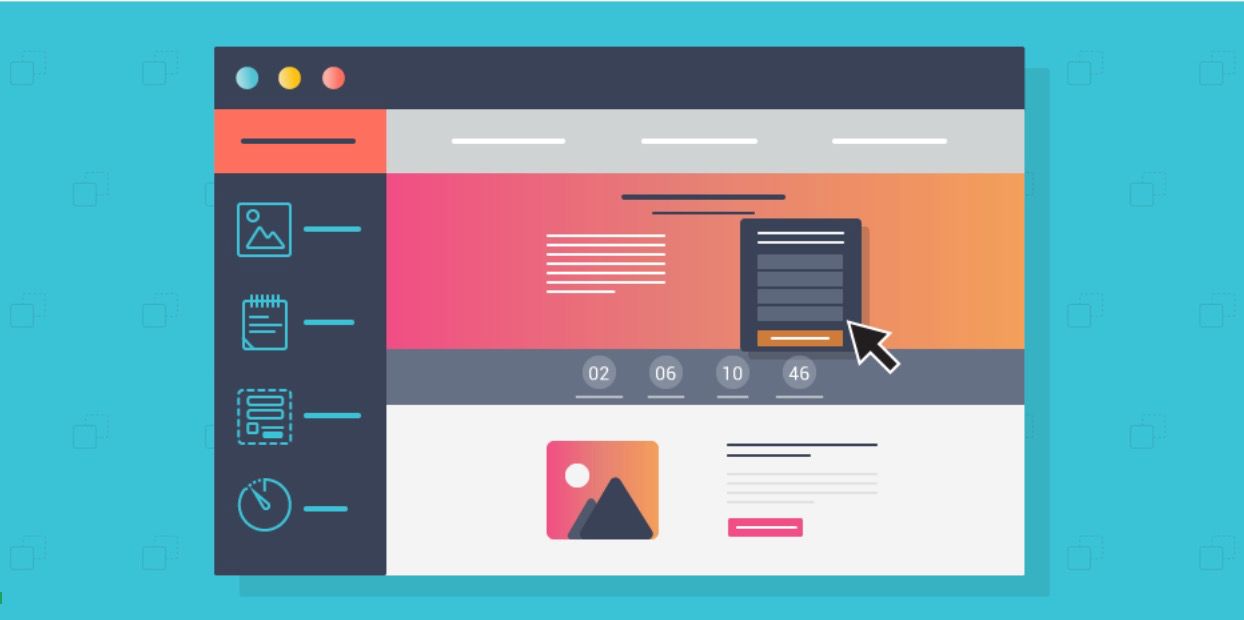
Photo: www.kaboompics.com (Pexels)
Both tools target marketers who want more than a basic WordPress page. But they’re built for different workflows — and picking the wrong one means paying for features you’ll never use.
What each tool actually does
Before comparing numbers, it helps to understand the core design philosophy behind each platform.
Unbounce: conversion-focused page builder
Unbounce launched in 2009 with a single mission — build landing pages that convert. The platform offers a drag-and-drop builder, 100+ templates, A/B testing, and its own AI-powered feature called Smart Traffic, which automatically routes visitors to the page variant most likely to convert for their profile.
It integrates with most major email and CRM tools (ActiveCampaign, Kit, HubSpot) rather than replacing them. Unbounce handles the top of your funnel well. It does not handle checkout, upsells, email sequences, or memberships natively.
ClickFunnels 2.0: end-to-end funnel system
ClickFunnels 2.0 is a full-stack funnel builder. You can build opt-in pages, sales pages, order forms, one-click upsells, downsells, thank-you pages, and email automation — all inside one platform. The 2.0 version added a website builder, blog, and a built-in CRM layer called “Smart Contacts.”
For someone selling a digital product, coaching offer, or online course without wanting to stitch together five separate tools, ClickFunnels reduces tool sprawl significantly.
Unbounce vs ClickFunnels: pricing, features, and best fit — a full breakdown
Here’s where the two platforms diverge most sharply. The pricing structures reflect very different assumptions about who the user is and what they need.
Unbounce pricing (2024)
Unbounce offers three tiers, billed monthly or annually (annual saves roughly 25%):
- Build — $99/month: 1 domain, 500 conversions/month, unlimited landing pages, pop-ups, sticky bars, A/B testing.
- Experiment — $149/month: 3 domains, unlimited conversions, advanced reporting, AI optimization.
- Optimize — $249/month: 5 domains, Smart Traffic AI routing, full audience insights.
Annual billing drops those prices to $74, $112, and $187/month respectively. There’s a 14-day free trial on all plans.
One important note: Unbounce caps conversions (form submissions + click goals) on the entry plan. If you run a high-traffic campaign and hit 500 conversions quickly, you’ll need to upgrade or throttle your traffic — neither is ideal.
ClickFunnels 2.0 pricing (2024)
ClickFunnels runs two primary plans:
- Basic — $97/month ($81/month annual): 1 website, 20 funnels, 1 admin user, 3 courses, 10,000 contacts.
- Pro — $297/month ($248/month annual): 1 website, 100 funnels, 5 users, 15 courses, 25,000 contacts.
There’s also a Funnel Hacker plan at $497/month (3 websites, unlimited funnels, 200,000 contacts) aimed at agencies and larger operators.
ClickFunnels offers a 14-day free trial as well. The contact and funnel limits on the Basic plan are meaningful restrictions — if you plan to run multiple campaigns simultaneously, you’ll hit the 20-funnel ceiling faster than expected.
Feature-by-feature comparison
| Feature | Unbounce | ClickFunnels 2.0 |
|---|---|---|
| Starting price | $99/month (Build) | $97/month (Basic) |
| Free trial | 14 days | 14 days |
| Landing page builder | ✅ Core feature, drag-and-drop | ✅ Included, funnel-first layout |
| A/B testing | ✅ All plans | ✅ Basic split testing |
| AI traffic optimization | ✅ Smart Traffic (Optimize plan) | ❌ Not built-in |
| Full funnel flows (upsells, downsells) | ❌ Not native | ✅ Core feature |
| Built-in email automation | ❌ Requires integration | ✅ Follow-up funnels included |
| Native checkout / order forms | ❌ Requires third-party | ✅ Built-in |
| Membership / course hosting | ❌ | ✅ Up to 3 courses (Basic) |
| Pop-ups and sticky bars | ✅ Native | ❌ Not native |
| Templates | 100+ landing page templates | 300+ funnel and page templates |
| Conversion tracking | Built-in conversion goals | Basic analytics, integrates with GA4 |
| Custom domains | 1 (Build), 3 (Experiment), 5 (Optimize) | 1 (Basic), 3 (Pro) |
| CRM | ❌ (relies on integrations) | ✅ Smart Contacts (basic CRM) |
| Best for | PPC advertisers, agencies, A/B testers | Digital product sellers, course creators |
Where Unbounce wins
PPC campaign management at scale
If you run Google Ads or Meta Ads for multiple clients or multiple products, Unbounce’s structure fits that workflow. You can spin up campaign-specific pages quickly, run simultaneous A/B tests, and let Smart Traffic handle variant distribution without manually splitting traffic.
An agency managing 10 ad campaigns can build a separate high-converting page for each campaign within one Unbounce account on the Experiment plan ($149/month). That’s a clean, low-overhead setup.
Conversion rate optimization depth
Unbounce’s reporting shows form submission rates, click-through rates by variant, and confidence intervals on A/B tests. Smart Traffic goes further — it uses machine learning to segment visitors and serve the best-performing page variation based on device, browser, location, and referral source.
ClickFunnels 2.0 offers basic split testing but nothing close to Smart Traffic’s granularity. For CRO-focused marketers, that gap matters.
Integration-first workflows
Unbounce connects natively with ActiveCampaign, Kit, GetResponse, Salesforce, HubSpot, Zapier, and most major CRMs. If you already have an email system you trust — say, ActiveCampaign for advanced behavioral automation — Unbounce slots in cleanly rather than trying to replace it.
Where ClickFunnels wins
Selling digital products without a tech stack
A solo course creator selling a $297 online course needs: a sales page, an order form, a payment processor, a thank-you page with course access, and ideally a follow-up email sequence. ClickFunnels Basic ($97/month) handles every single step. Unbounce handles only the sales page.
The difference in tool count matters. Running an Unbounce page for the same workflow requires adding Stripe or ThriveCart for checkout, Teachable or Podia for course hosting, and Kit or ActiveCampaign for email — three extra subscriptions plus the integration maintenance.
Multi-step funnel logic
ClickFunnels was designed around the concept of funnel steps: a visitor moves from opt-in → sales page → order bump → upsell → downsell → confirmation. Each step passes data forward. Order bumps alone can increase average order value by 15–30% [verify] — and ClickFunnels implements them natively in about five minutes.
Replicating this with Unbounce requires stitching together multiple tools and custom redirect logic. Technically possible, but not what Unbounce was built for.
Built-in email automation
ClickFunnels 2.0 includes follow-up funnels — a basic email automation system tied directly to funnel actions. It won’t replace ActiveCampaign for complex behavioral segmentation, but it handles post-purchase sequences, abandoned cart nudges, and simple nurture flows without a separate email subscription.
For bootstrapped operators keeping costs low, that consolidation matters.
The cost reality: total stack price
A fair comparison accounts for what else you need to buy alongside each tool.
Unbounce-based stack for a digital product seller:
– Unbounce Build: $99/month
– Kit Creator (email, 1,000 subscribers): $29/month
– Teachable Basic (course hosting): $39/month
– ThriveCart (checkout, one-time): ~$495 lifetime or ~$30/month equivalent
– Estimated monthly: ~$167–$197/month
ClickFunnels 2.0 Basic for the same seller:
– ClickFunnels Basic: $97/month
– No separate course tool needed (3 courses included)
– No separate checkout tool needed
– Basic email automation included
– Estimated monthly: $97/month
Unbounce-based stack for a PPC agency:
– Unbounce Experiment: $149/month
– ActiveCampaign (client email, if managed): optional
– Estimated monthly: $149/month — and no extra tools are needed if the agency only delivers pages, not full funnels
The stack math consistently favors ClickFunnels for product sellers and Unbounce for page-focused agencies.
Who should choose which: a decision matrix
This is where the Unbounce vs ClickFunnels: pricing, features, and best fit question resolves clearly.
Choose Unbounce if you:
– Run paid ads and need dedicated, fast-loading campaign landing pages
– Already use ActiveCampaign, Kit, or HubSpot and don’t want to replace them
– Need multi-variant A/B testing with statistical confidence reporting
– Work in an agency and manage pages across multiple client brands
– Don’t need checkout, upsells, or email sequences in the same tool
Choose ClickFunnels 2.0 if you:
– Sell digital products, coaching, or online courses directly to consumers
– Want one platform for pages, checkout, email, and course delivery
– Are building a new business and want to minimize subscriptions
– Need one-click upsells and order bumps as core selling mechanics
– Are comfortable with a slightly steeper learning curve for a broader feature set
Consider neither if you:
– Just need a simple website — WordPress with Elementor Pro ($59/year) handles that far more cost-effectively
– Are on a tight budget — Systeme.io offers funnel building, email, and course hosting on a free plan that covers most early-stage needs
Alternatives worth considering
The Unbounce vs ClickFunnels comparison doesn’t exhaust the market. Two other tools from our anchor list deserve a mention based on use case.
Systeme.io runs a legitimate free plan (2,000 contacts, 3 courses, unlimited funnels) that beats both paid options for anyone just getting started. The trade-off is fewer templates and a simpler interface.
Kartra ($119/month) sits closer to ClickFunnels in philosophy — funnels, email, membership, video hosting, and a built-in help desk under one login. It’s worth evaluating if ClickFunnels’ funnel limits on the Basic plan feel too tight.
Frequently asked questions
Is Unbounce better than ClickFunnels for beginners?
It depends on what “beginner” means in context. Unbounce is simpler if your goal is building one high-converting landing page for a paid ad campaign. ClickFunnels has a steeper learning curve but gives beginners a complete system for selling a product — which often means faster first revenue without adding extra tools.
Can you use Unbounce and ClickFunnels together?
Technically yes, but there’s almost no practical reason to. You’d be paying $200+ per month for overlapping functionality. The only edge case is an agency using Unbounce for client ad pages while also running its own ClickFunnels-based product offer separately.
Does ClickFunnels replace email marketing tools like Kit or ActiveCampaign?
For simple sequences, ClickFunnels’ built-in follow-up funnels are adequate. For behavioral automation, tagging, advanced segmentation, or broadcast newsletters, tools like ActiveCampaign or Kit still outperform it. Most serious operators eventually add a dedicated email platform even if they start with ClickFunnels’ built-in system.
What’s the difference between a landing page and a sales funnel?
A landing page is a single standalone page designed to capture a lead or direct a click. A sales funnel is a multi-step sequence — typically a landing page, a sales page, a checkout page, and post-purchase pages — designed to move a prospect from awareness to completed purchase. Unbounce specializes in the former; ClickFunnels handles the full latter.
Is ClickFunnels worth $97/month for a brand-new online business?
If you’re actively selling a product or building toward a launch within 60–90 days, the consolidation value justifies the price. If you’re still in the ideation or content-building phase, Systeme.io’s free plan is the more rational starting point. The $97/month makes sense once you have an offer ready to sell.
The Unbounce vs ClickFunnels: pricing, features, and best fit comparison ultimately reflects two genuinely different philosophies. Unbounce optimizes the page. ClickFunnels orchestrates the journey. Neither is universally better — the right answer depends on whether you need a precision conversion tool or an all-in-one selling system.
For a deeper look at how ClickFunnels 2.0 compares to other all-in-one platforms like Kartra and Systeme.io, see our funnel builder comparison guides — the full breakdown covers pricing, feature depth, and migration difficulty across the category.
0 Comments on "Unbounce vs ClickFunnels: pricing, features, and best fit"
Related posts



Leave a Comment
You must be logged in to post a comment.